The Swiss People’s Party brings out the worst in Swiss democracy
Press release
Today, Swiss voters rejected the popular initiative to cap the population launched by the Swiss People’s Party (SVP). On paper, we won. But Swiss democracy lost. With its xenophobic initiatives, the SVP has been setting the agenda for decades, and everyone joins in. As long as we keep raising a glass to this shitshow and calling it “democracy in action”, instead of rejecting it outright, the SVP will continue its game with Swiss democracy. And we all lose.
Switzerland’s system of direct democracy is envied around the world. Rightly so, because it is unique. But right‑wing populists love it, too, because it is an excellent tool to capitalize on popular resentment against minorities and even more against foreigners, who make up 28% of the population and have no voting rights. From the ban on ritual slaughter in 1893, the very first popular initiative in Switzerland, which had a clear anti-Semitic touch, right up to today’s vote, the mobilisation of xenophobic resentments runs like a thread through the history of Swiss democracy.
Today we look back on yet another vote campaign about which we can only say: the right-wing populists bring out the worst in democracy. For months, the largest party in the country has been agitating against foreigners: “too many, and the wrong ones”. But the real problem is not the SVP itself, because its right‑wing populism and xenophobia no longer surprise anyone. The problem is everyone else in this democracy who plays along with this game.
Even before the first opinion poll, it was clear that the initiative had a real chance of being accepted. That was the beginning of the end. No one wanted to burn their fingers on this hot potato and clearly name the SVP’s initiative for what it is: xenophobic. Instead, everyone hemmed and hawed, feeding easy emotions and supposed sensibilities: “the people’s” worries, crowded trains, high rents – and yes, there are just a bit too many, everyone seems to agree. From the cross‑party “no” campaign led by the Liberal Democratic Party (FDP), which argued with “criminal tourists” and “criminal asylum seekers” just like the islamophobic Egerkingen Committee (which was behind both the minaret ban and the “burqa ban” in Switzerland), to the “utilitarian racism” that the Wochenzeitung aptly described and that everyone ultimately joined. “Our” pension system, “our” roads, “our” elderly: we need “them”, these useful foreigners. In the end, the strategy of the right‑wing populists worked perfectly: almost everyone adopted the SVP’s rhetoric.
Is this still democracy?
Campaigns like this one bring out the ugliest side of democracy. They feed misanthropic and inflammatory narratives and mobilise nothing but fear, hatred and resentment. Instead of democratically discussing who we want to be as a society, where we want to go together, and how we want to shape our common life, we vote on how to decide on the fate of vulnerable people regardless of their fundamental rights: whether we should first strip people in need of protection granted temporary admission of their status and their right to family life. And we all pretend that this is a serious, legitimate debate worthy of a fully fledged democracy. Seriously?
The SVP’s initiative was rejected today. But Swiss democracy lost. Long before this vote, and soon again with the next xenophobic popular initiative on the restriction of asylum (the so-called “Grenzschutzinitiative”). Because even if it violates peremptory norms of international law, Parliament will hardly have the courage to fulfil its constitutional duty to invalidate the popular initiative: the fear of the SVP is too great. And it will not be long before the next anti-immigrant initiative is launched.
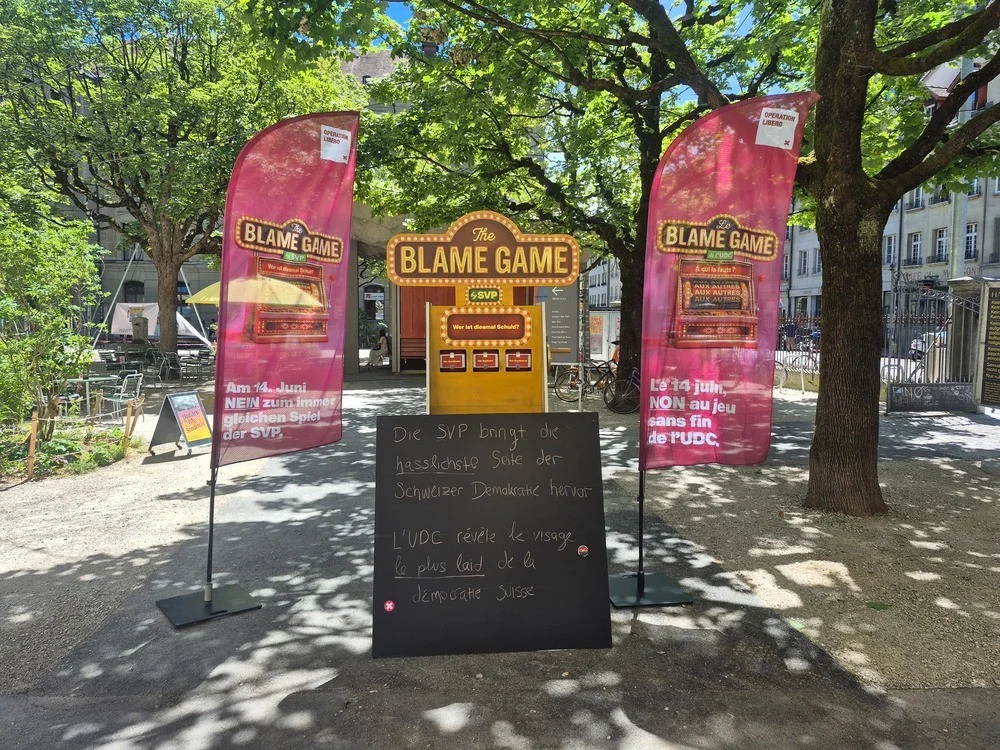
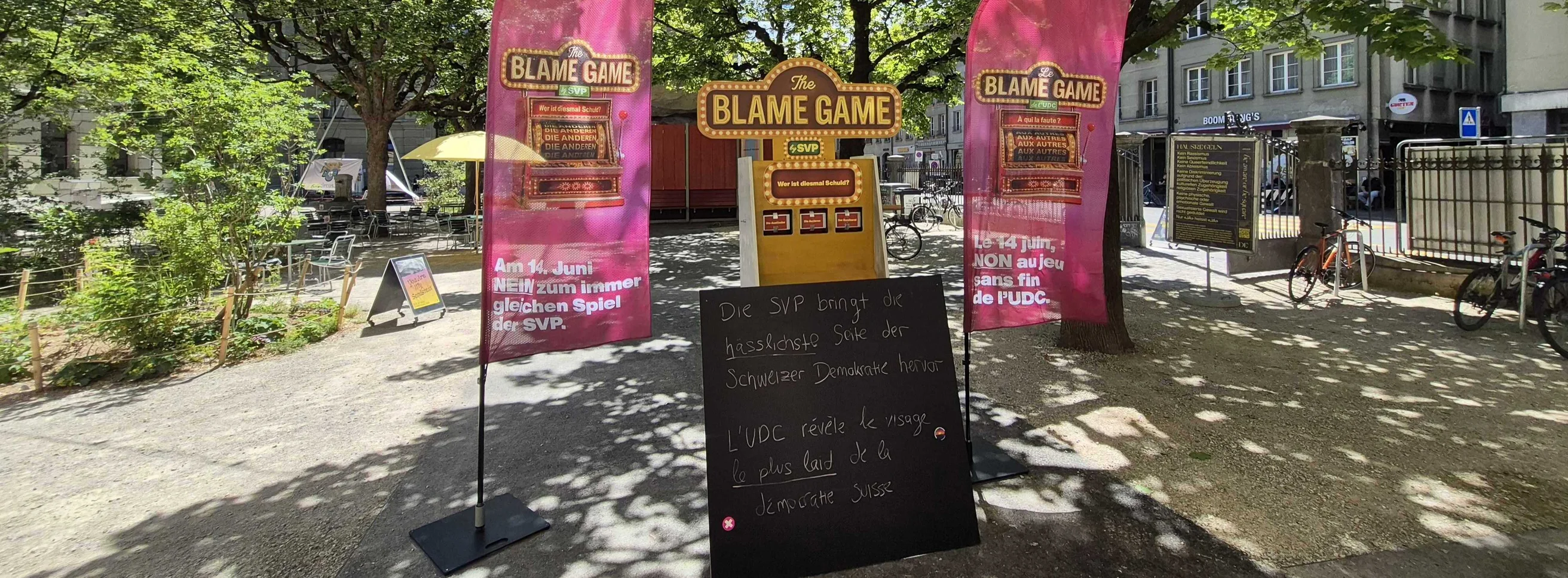
This is exactly what Operation Libero’s “blame game” campaign has drawn attention to. It is always the same game: “The foreigner is to blame!” Switzerland must free itself from the SVP’s stranglehold and reject these recurring proposals with utmost resoluteness: at the local pub, at family gatherings, in sports clubs, in the media, in Parliament, and, ultimately, at the ballot box.